




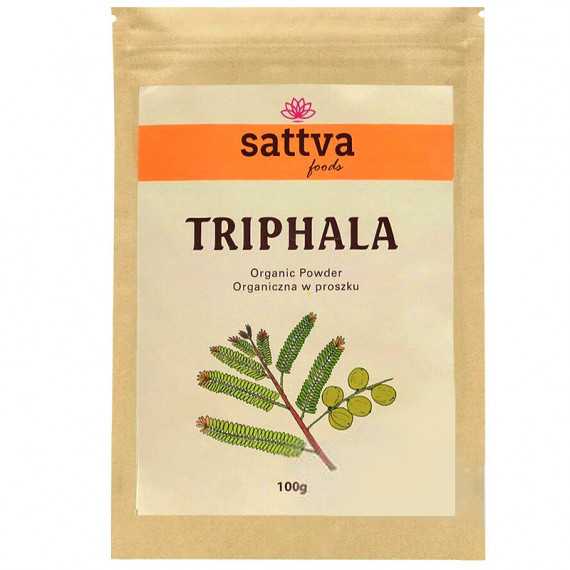
Roll over image to zoom in
Triphala Powder 100 g
10.30 € (103.00 €/kg)
Buy more, save more
Little known in Estonia, Triphala has been valued in Ayurveda for thousands of years and consists of three plants. It is now gaining popularity around the world as well. Triphala is traditionally used as part of cleansing routines and to restore vitality. Each of the three plants is valued on its own, and together they form a classic Ayurvedic blend.
What is Triphala made of?
Amla (Emblica officinalis)
Better known as Indian gooseberry, amla plays an important role in Ayurveda. It is one of the oldest edible fruits known in India and grows throughout the country. The berries have a sour, sharp taste and a fibrous texture. For this reason they are often pickled, soaked in sugar syrup or cooked into dishes to improve their flavour.
Indian gooseberry is very nutritious and naturally contains vitamin C, amino acids and minerals. It also contains plant compounds such as phenols, tannins, phyllembelic acid, rutin, curcuminoids and emblicol. In Ayurveda it has traditionally been used to support digestion.
Bibhitaki (Terminalia bellirica)
Terminalia bellirica is a large tree that commonly grows in Southeast Asia. Its fruits have long been used in traditional Ayurvedic practice.
Bibhitaki contains tannins, ellagic acid, gallic acid, lignans, flavones and many other plant compounds.
Haritaki (Terminalia chebula)
Terminalia chebula is a tree that grows throughout the Middle East, India, China and Thailand. In Ayurveda the plant is known as “haritaki”, and the small green fruits of the tree are used. Haritaki is highly esteemed in Ayurveda and is often called the “king of herbs”.
Haritaki contains phytochemicals such as terpenes, polyphenols, anthocyanins and flavonoids. In Ayurveda it is traditionally used to support digestion and regular bowel movements.
How is Triphala traditionally used?
Rich in plant compounds
Triphala naturally contains vitamin C, flavonoids, polyphenols, tannins, saponins and other plant compounds.
Oral care
In traditional practice, Triphala has also been used as a mouth rinse as part of oral hygiene.
Digestion
Since ancient times Triphala has been used as a natural aid for digestive comfort and regular bowel movements. It has a mild natural laxative effect.
Possible side effects
Although Triphala is generally considered safe, it can cause side effects in some people.
For example, because of its natural laxative effect it can cause diarrhoea and abdominal discomfort, especially in large doses.
Triphala is not recommended for pregnant or breastfeeding women and should not be given to children.
In addition, it may interact with certain medicines, including blood thinners such as warfarin, or reduce their effectiveness. Indian gooseberry, one of the main components of Triphala, may increase the risk of bleeding and bruising in some people and may not be safe for people with bleeding disorders.
How to use Triphala
For best absorption, it is recommended to take Triphala on an empty stomach between meals.
The usual recommended dose is 500 mg to one gram (1 tsp) per day.
The powder can be mixed with warm water and honey and taken before meals.
It can also be mixed with ghee (a type of clarified butter) and added to warm water for a soothing drink, or mixed with honey to form an edible paste.
Large doses may cause digestive upset such as diarrhoea, so it is best to start with a smaller dose and gradually work up to the recommended amount.
Although Triphala is considered safe for most people, consult your doctor before use to ensure safety and correct use.
Additional information
| Brand |
|---|


Reviews
There are no reviews yet.